
Introduction
Selecting the appropriate truck suspension requires a holistic evaluation of load requirements, road conditions, cargo type, regulatory standards, budget constraints, and operating scenarios. The right suspension not only ensures safety and compliance but also enhances efficiency, reduces operating costs, and extends vehicle life. This guide provides a detailed comparison of common suspension types and practical selection principles to help businesses make informed decisions.
I. Comparison of Major Suspension Types
| Suspension Type | Key Advantages | Limitations | Typical Applications |
|---|---|---|---|
| Leaf Spring Suspension | Simple structure, low cost, high reliability, easy maintenance, strong load-bearing capacity. | Poor damping performance, heavy weight, shorter lifespan (approx. 500,000–600,000 cycles). | General freight, heavy-duty transport, rough road conditions, budget-sensitive operations. |
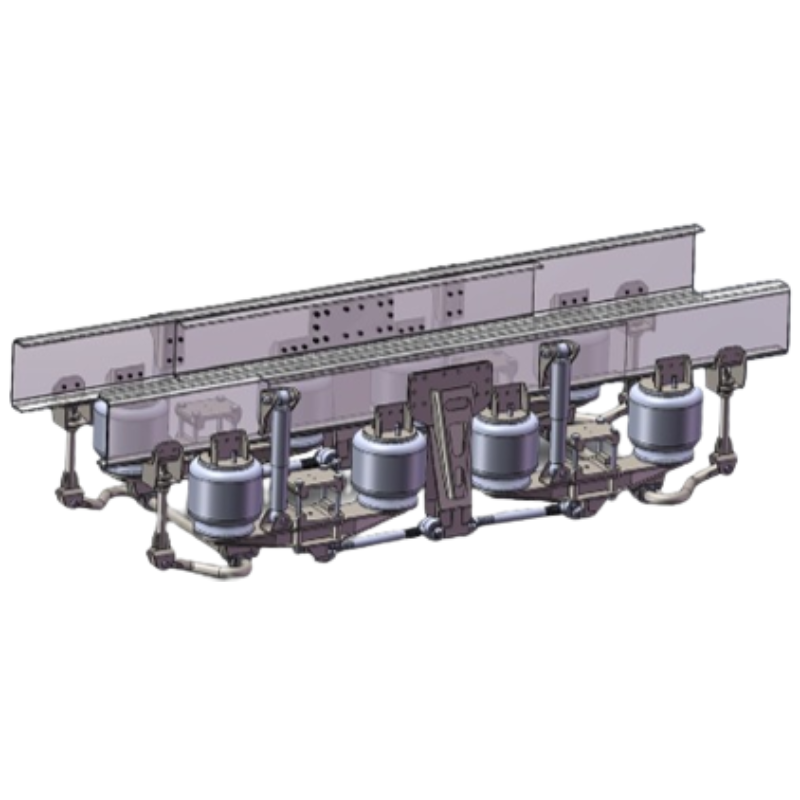
| Air Suspension | Excellent damping for improved ride comfort and safety; adjustable height for varied loading docks; lightweight; long lifespan (over 3 million cycles, 2–3 times that of leaf springs). | High cost (≈10× leaf springs), complex structure, requires specialized maintenance. | High-value cargo (e.g., precision instruments, tobacco, cold chain), highway transport, drop-and-hook operations, regulatory compliance. |
| Few-Leaf Spring Suspension (Upgraded leaf spring) | 30%–40% lighter than multi-leaf springs; even stress distribution; high fatigue strength; improved ride comfort. | Higher cost than standard leaf springs. | Mid-range trucks balancing lightweight design and cost efficiency. |
| Hybrid Suspension (Air + Leaf Spring) | Combines some benefits of air suspension with lower cost of leaf springs. | Limited adjustability compared to full air systems. | Scenarios requiring a balance between cost and performance. |
II. Suspension Selection Principles
1. Compliance with Regulatory Requirements
- Three-axle flatbed and curtain-sided semi-trailers must be equipped with air suspension.
- Dangerous goods transport vehicles (including semi-trailers) also require air suspension by regulation.
2. Based on Load and Cargo Type
- Heavy loads, variable road conditions, general dry cargo → Prioritize leaf spring or few-leaf spring suspension.
- High-value, fragile, or precision goods → Air suspension is mandatory.
- Frequent loading/unloading, need for dock alignment → Choose air suspension with ECAS/iCAS systems for smartphone-controlled height adjustment.
3. Road Condition Adaptation
- Poor or unpaved roads → Opt for European-style air suspension (long airbag travel, superior damping) or leaf spring suspension.
- Highways and smooth roads → Consider American-style air suspension (lightweight, excellent lateral support).
4. Economic Considerations
- Initial cost sensitivity → Choose leaf spring suspension.
- Long-term operation (fuel efficiency, tire wear, maintenance, compliance) → Air suspension is more advantageous, especially under weight regulations (e.g., 6×4 trucks with air suspension can carry 1 ton more legally, with a total weight limit of 26 tons).
5. Light/Medium Truck Front Suspension Options
- Independent Suspension (MacPherson strut): Better handling, higher comfort, lower cost; suitable for loads under 1 ton.
- Leaf Spring Suspension: Strong load capacity (1–2 tons); ideal for rental or variable-load scenarios.
Conclusion
Choosing the right suspension involves balancing performance, regulations, and total cost of ownership. For most applications in China, anti-roll air suspension (a hybrid design) is widely recommended for its adaptability to varied roads and cargo types. Businesses should evaluate their specific needs and consult with experts or service centers to ensure optimal selection and reliable operation.